The BLC Blog

A forum and learning place for British Language Centre students

Wednesday, May 26, 2010

Expression of the Fortnight - 17

BREAK A LEG!

This expression reflects a theatrical superstition where it is seen as bad luck to wish an actor good luck before he / she goes on the stage. Although it is more commonly used in theatre, it is also used more and more outside the theatre as superstitions and customs spread.

I thought since the Cambridge exams were coming up, I would take this opportunity to tell the students who are sitting an examination this June to Break a leg!

Labels: , , ,

Wednesday, May 12, 2010

Expression of the Fortnight - 16

to give something a shot

If you are prepared to give something a shot that means that you are willing to make an attempt to do something. If you give something your best shot it means that you are going to do your very best to achieve something.

I'm not really sure if it will work but I'm going to give it my best shot.
I've never played golf before but I'm going to give it a shot.
I'd like to give parachuting a shot.

Labels: , , ,

Wednesday, April 28, 2010

Expression of the Fortnight - 15

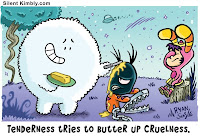
TO BUTTER SOMEBODY UP
This fortnight's expression came up in class when one of my students was paying me a compliment. I wondered if my student had an ulterior motive for being so nice to me. I asked her if she was trying to butter me up! To butter somebody up is to be very kind or friendly to them or try to please them in some way so that they will do what you want them to do. Buttering somebody up is a way of manipulating them.
You'll have to butter her up a bit if you want her to agree to that!

Labels: , , ,

Wednesday, April 14, 2010

Expression of the Fortnight - 14

To be two-faced

If someone is two-faced it means that they seem pleasant and kind when they are talking to you but then behind your back they say unpleasant things about you to other people. A two-faced person is insincere.

I don't trust her. I suspect she is a bit two-faced.

Jacky is completely two-faced. She pretends to be your friend but then she bitches about you to other people!


Labels: , ,

Wednesday, March 24, 2010

Expression of the Fortnight - 13

TO HIT THE NAIL ON THE HEAD

The origin of this expression is not really known but it is a very old expression indeed -it was first found in a book from 1438. The expression is used to mean get to the precise point, the exact answer or to do / say something exactly right. The saying is very similar in Spanish 'dar en el clavo'.
I think John hit the nail on the head when he said what was missing in this company was a feeling of confidence.
Mary doesn't often contribute in meetings but when she does she usually hits the nail on the head!

Labels: , , ,

Thursday, March 11, 2010

Expression of the Fortnight - 12

GO DOWN LIKE A LEAD BALLOON
This fortnight's expression is used to refer to something that is not accepted in a positive way. If you say something or show something to people and they do not react as you had hoped then you can say that whatever it was went down like a lead balloon. (Lead (pronounced led) is a very heavy material). This expression is most commonly used in the past simple.
My joke about the alcoholic went down like a lead balloon!
My suggestion about increasing office hours went down like a lead balloon.
Well that went down like a lead balloon! (said by someone after delivering a presentation that wasn't well-received)
Story has it that Keith Moon of The Who, on hearing a song on the radio by Jimmy Page and his group the Yardbirds, said "That will go over like a lead zeppelin!". Obviously, he thought the song wasn't so good and that the general public wouldn't buy it. Of course, he must have been wrong because Jimmy Page and his band renamed themselves Led Zeppelin, who of course were very successful.

Labels: , ,

Thursday, February 25, 2010

Expression of the Fortnight - 11

STRAIGHT FROM THE HORSE'S MOUTH

If you hear something straight from the horse's mouth or you know that a piece of information has come straight from the horse's mouth then you know that you can believe it because it has come from an authoritative or dependable source.

"Are you sure John is leaving the company?"
"Definitely, I heard it straight from the horse's mouth!"
(John told you himself)


"This comes straight from the horse's mouth so it has to be believed!"

Labels: , , ,

Thursday, February 11, 2010

True Romance

It's almost Valentine's Day again and a time for love and romance. Do you celebrate Valentine's Day by showering your loved one with gifts? Or do you think it is all a load of old codswallop? Whatever you think about this holiday of love, why not take the opportunity to learn some love related idioms in English. Here is a good web page with lots of relationship related idiomatic expressions and their definitions. Have fun learning and Happy Valentine's Day for Sunday!

Labels: , , ,

Tuesday, February 9, 2010

Expression of the Fortnight - 10

YOU CAN'T JUDGE A BOOK BY ITS COVER

This expression is related to last fortnight's expression (beauty is only skin deep). It means that you cannot know what something or someone is really like just by looking at their appearances. It is often used in the imperative 'Don't judge a book by its cover!" when you want to remind someone that there are more important things than just the aesthetic qualities of something.
Two famous examples of judging a book by its cover can be seen in the last two seasons of Britain's Got Talent. The looks on the faces of the panel of judges when they met both Paul Potts and Susan Boyle were priceless. (Click on the names to see the video clips) And look at the shock they got! This just proves that we should not be led by what is on the outside!

Labels: , ,

Thursday, March 19, 2009

Expression of the Fortnight - 6

TO TIGHTEN YOUR BELT


This is an expression that means to spend less money than before because you have less money, you aren't working as much or because you are feeling the effects of an economic crisis. It means to economise.

I've had to tighten my belt since I stopped working full-time.

We need to tighten our belts at the moment and stop spending so much on unnecessary items.

Have you had to tighten your belt this year?

The expression comes from the idea that when we haven't had enough to eat, perhaps because we can't afford, we lose weight and therefore have to pull our belt more around our waist to stop our trousers from falling down. Another variation of this expression is 'to tighten the purse strings' which literally means that it is harder to get money out of your purse!

Labels: , ,

Wednesday, February 11, 2009

Love is in the Air....

With Valentine's Day on its way I thought it would be a nice idea to look at some idioms using the word 'heart'.

One expression is 'to wear your heart on your sleeve', which means to openly show your feelings and opinions and not to hide the way you really feel about something.

John always has his heart on his sleeve so that everyone knows how he feels.

A second expression is 'to learn something (off) by heart' which is when you learn something in a way that you can say it from memory.

I can still recite off by heart the extracts of Romeo and Juliet that I learnt at school.

Tom has seen that film so many times he knows all the lines off by heart!

Another expression is 'to have a heart of stone' which is used to describe a person who is unkind and cruel. Scrooge from Dickens' A Christmas Carol is a famous example of someone with a heart of stone. This is of course the opposite to having 'a heart of gold'.
The fourth and final expression for today is 'to set your heart on something'. When you do this it means that you really, really want to get something or achieve something.
Sarah has really set her heart on having a puppy.
Of course, there are many, many more idioms and expressions using the word heart in English. Too many for this entry. Perhaps you would like to discover some more by yourself on the Online Cambridge Dictionary. If you find one you particularly like, why not post it in the comments box!

Labels: , , ,

Thursday, October 30, 2008

Expression of the Fortnight - 2

TO HAVE A SKELETON IN THE CUPBOARD


This colloquial expression refers to a dark, embarassing secret that we don't want other people to know about! If other people discovered our skeleton, it could have a negative effect on our life. The secret can be something scandalous that we have done in the past. (In American English they say a skeleton in the closet)

If you want to be a successful politician, you can't have too many skeletons in your cupboard.

Every family has got one or two skeletons in the cupboard.

It has been suggested that the origin of this expression lies with the medical profession. In the past, doctors were not allowed to work on dead bodies for research unless they were the bodies of executed criminals. Therefore, bodies for research were hard to find and so when a doctor managed to get hold of one he would keep the skeleton for further research. It was not publicly acceptable for doctors to display these skeletons for everyone to see so they had to hide them away. The most obvious place for storage was of course a cupboard or a closet and that is where this expression comes from.


Labels: , , , ,

Thursday, October 16, 2008

Expression of the Fortnight - 1

This is going to be a bi-monthly entry called Expression of the Fortnight which I will post mid-week every two weeks. So, to start us off...

THE STRAW THAT BROKE THE CAMEL'S BACK
This is an idiom which originated from an Arab proverb about a camel which couldn't move because it had been overloaded with too much straw (paja). We use this idiomatic expression when a small and seemingly insignificant thing happens on top of a longer list of bad things making our whole situation too much to bear (supportar). It is more common to use the shorter version of this expression which is the last / final straw. This emphasises the fact that it is the last unpleasant occurence in a series of negative situations that makes you feel that you cannot continue! The Spanish equivalent would be 'la gota que colmó el vaso'.
The low salary and the demanding boss were bad enough, but the rude co-worker was the last straw. (Then I decided to quit the job.)
Perhaps you have an anecdote you would like to share with us which would explain the meaning of this idiom. I am sure everyone would love to read it so why don't you post it in the comments box or email me and we can post it directly onto the blog!

Labels: , , ,

Friday, June 20, 2008

National Idioms -4

Today we are looking at Greece and the Greeks and the expressions that exist in the English language relating to them.

First of all there is a fixed idiom that is used to say that something doesn't not make any sense to you. In Spanish people tend to say that something looks Chinese, but in English we say "It's all Greek to me!".

Secondly, there is a proverb which comes from Virgil's Aeneid and relates back to the time when the Greeks tricked the people of Troy with their gift horse. The actual wording in Virgil's work was “Whatever it is, I fear Greeks even when they bring gifts.” (Spoken by Laocoon, “Quidquid id est, timeo Danaos et dona ferentes.”) In English we have simplified this and say 'Beware of Greeks bearing gifts". The expression is used to remind people that they should not trust their enemies.

Finally for today we have an expression that comes from Greek mythology to talk about a small fault or weakness in somebody or something that could lead to their destruction or failure. The expression is of course 'Achilles Heel' in reference to the great Greek hero who was killed when an arrow was shot into his heel.

Labels: , ,

Wednesday, June 18, 2008

National Idioms - 3

Today we are going to look at expressions containing the word' turkey' (more as a reference to the homonym of turkey as a bird and not to the country.) Then we will go on to look at some compound nouns with the adjective 'Turkish'.

The first expression is 'cold turkey.' This is slang and it describes the period of extreme suffering when a person suddenly stops taking a substance to which they have become addicted, such as drugs. You can also say to 'go cold turkey' to emphasise the fact that somebody has given something up without any help such as nicotine patches or substitute drugs.

Another expression is 'to talk turkey'. This is an Ametican saying and it means to talk honestly and frankly about something. If somebody says to you "Let's talk turkey", they either want you to be honest with them, or they are warning you that they are going to be quite direct.

Now for some compound nouns. Have you ever had a Turkish bath? They are supposed to be very relaxing. Sit back and chill out in steam and let someone massage away all your troubles. After having a Turkish bath, you may feel like indulging your sweet tooth, so how about some Turkish delight? This is a typical sweet from Turkey and was so named by an unknown British man who brought some of these sweets back to the UK after a trip to Turkey.

Labels: , ,

Friday, June 13, 2008

National Idioms - 2

There is one expression which includes the word 'French' which is quite old-fashioned, although it is still commonly said today in a humourous way. When someone is talking and they use a swear word and want to pretend that they are sorry for using such bad language, they may say " Pardon / Excuse my French!"
More than idioms related to French, we have a great number of borrowings from the French language. Some common words that English has borrowed from French are;
These are just a few, of course there are many, many more.

Labels: , ,

Tuesday, June 10, 2008

National Idioms -1

I thought that this month we could look at some idiomatic phrases that are related to the countries or nationalities of the teams that are participating in the Euro Cup. Today we are going to look at idioms containing the word 'Dutch' which, if you remember from Saturday's entry, is the name given to the people from the Netherlands and their language.

The first expression is 'Dutch courage' Sometimes when people have to do something frightening, they like to have a strong alcoholic drink to steady their nerves and calm them down. The confidence that comes from having this drink is what is known as Dutch courage.

The second expression is 'double Dutch'. One of the Words of the Week a couple of months ago was 'gibberish' and this expression has a similar meaning. If somebody is talking nonsense and you cannot understand them, you can say that they are speaking double Dutch.

The final idiom is 'to go Dutch'. Traditionally, when a man and a woman went out for a meal together on a date, the man would usually pay for it. Nowadays, it is more common for people to share the bill equally. When you do this it is known as going Dutch.

Labels: , ,

Wednesday, May 14, 2008

Idioms with bread

To continue the theme of sandwiches this week I thought we could look at some set idiomatic expressions using bread or loaves.
My teachers at school used to be quite impatient and if they thought we should know the answer to something they always shouted 'Use your loaf!' This meant that we should think more carefully. The expression originates from the cockney slang loaf of bread meaning head.
Another expression using bread is 'the best thing since sliced bread'. If you think somebody or something is absolutely fantastic you can say that he / she / it is the best thing since sliced bread. I hope you think this blog is the best thing since sliced bread!
If you here somebody saying that something is their bread and butter, they are talking about what they do to make a living and survive. Teaching English is my bread and butter. What's yours?
Finally, do you know what side your bread is buttered on? You should do because you can have problems in life if not. You always need to know what is advantegeous for you and who you need to look after in life to get places!

Labels: , ,

Thursday, March 27, 2008

some, any, no, every redux

Just over a week ago we were looking at the difference between the compounds formed with some, any, no and every. In relation to this point I thought it would be a good idea to look at some idiomatic expressions containing those words to help you remember them!

1. somewhere along the line = at some point during a period or an activity.

I don't know exactly what happened but somewhere along the line I just stopped loving him.

2. pull something out of the bag = to suddenly do something to improve a bad situation

If Barcelona want to win the League this year they really need to pull something out of the bag.

3. be all dressed up with nowhere to go = we say this when we have put on some nice clothes to go somewhere nice but then there is a change of plans and we don't go anywhere.

I had put on my sexiest black dress and my new Manolo shoes and then John phoned to say that he couldn't meet me after all! I was all dressed up with nowhere to go!

4. the lights are on but nobody's home = a phrase to describe somebody you think is stupid or somebody who is unresponsive because they are thinking about something else.

It's no good expecting John to participate in the meeting. The lights are on but nobody's home.

5. anybody who is anybody = if anybody who is anybody is doing something it means that all the most famous and important people are doing that thing.

Anybody who is anybody will be at the Madrid Nobu restaurant opening, we have to get tickets.

6. be on everyone's lips = when a word or question is on everyone's lips, a lot of people are talking about it or are interested in it.

The question on everyone's lips at the moment is, where will Angelina Jolie choose to give birth to her new baby?

Labels: ,

Thursday, March 20, 2008

Easter Eggs

Soon it will be Easter and people all over the world will be buying, making or decorating their Easter eggs ready to present them to their friends, colleagues and family.

Since eggs form a large part of Easter celebrations I thought it would be a good time to look at some idiomatic expressions related to eggs.

The first idiom is 'to put all your eggs in one basket' which means that you depend on only one person or one plan of action to succeed. Obviously doing this is quite risky as you may lose all you eggs and fail to succeed. It is often used in the negative; Don't put all your eggs into one basket!

The second idiom is 'to teach your grandmother to suck eggs' which means that you are giving advice to somebody about something that they are more expert in than yourself.

You are teaching your grandmother to suck eggs, Ted. I have been playing this game since before you were born!
The third and final idiom of this entry is 'to walk on eggs / eggshells' which is used when we want to describe somebody who is being very careful not to offend or upset another person.

We're walking on eggshells with our landlord at the moment, one more loud party and she is sure to throw us out of the apartment!

There are of course a lot more idiomatic expressions containing the word egg. Perhaps you would like to investigate more yourselves and then post a comment in the comment box about anything interesting you find!


Labels: , , ,