The BLC Blog

A forum and learning place for British Language Centre students

Monday, November 5, 2007

Remember, remember the fifth of November...

Today is Guy Fawkes Night, or as it is sometimes better known, Bonfire Night. Traditionally in England on this night an effigy of Guy Fawkes is burnt on top of a bonfire and children and adults alike enjoy fantastic firework displays in their villages. It is often not very clear, even among the people of England, why this day is celebrated. On this day in 1605 Guido Fawkes and some fellow conspirators plotted to blow up the Houses of Parliament in London. They failed and were arrested and executed. There is some confusion as to whether we are celebrating the fact that the plot failed or the fact that the plot almost succeeded.

For more information about the history of this festival with interesting visuals, interactive games and listening practice, check out this link.

Happy Bonfire Night x

Labels: , , ,

Wednesday, October 31, 2007

Halloween and Autumnal Haikus

The 31st of October is Halloween and children all over the US and the UK will be out getting dressed up as ghosts, vampires or skeletons and running around their neighbourhoods knocking on doors and shouting 'Trick or Treat'. If the neighbours have any sense they will fill the children's buckets with sweets (candy - AmE), or wake up to find that they homes have been covered in egg!

Although dressing up and going trick or treating is the traditional way to celebrate Halloween, we at the BLC Blogger have thought of a cleaner and less troublesome way to mark the occasion...

...Have you ever heard of a Haiku? A Haiku is a Japenese style of poem which usually consists of three lines which have a 5, 7, 5 syllable pattern. Haikus usually contain a reference to a season of the year or to the natural world and therefore Halloween and Autumn provide lots of scope for a haiku.

Can you write a Haiku for our blog? If you are feeling creative post an entry in the comments box! If you need some inspiration, or if you just fancy reading some autumnal haikus, check out this web page.

Labels: , , , ,

Friday, April 20, 2007

The National Trust

If you go a-touristing in England, Wales or Northern Ireland, especially outside the big cities, you'll no doubt come across a National Trust property in your travels. The charitable organization runs over 300 sites: castles, houses and gardens (a speciality [AmEng specialty] of theirs), museums, factories and mines, villages, dovecotes, medieval barns, mills, pubs, lighthouses, nature reserves, coastline and countryside.
In my experience, National Trust properties are usually well-maintained and worth a visit if you're interested in history and the way people used to live. One of my favourite [AmEng favorite] places is Housesteads Fort on Hadrian's Wall.
In Scotland, there's the National Trust for Scotland.

Labels: ,

Friday, April 13, 2007

Newcastle and Coventry

These two English towns feature in some relatively common English expressions. (These are not generally understood in North American English, however.)

We talk about "carrying coals to Newcastle" when we want to say that an activity is redundant. This is because Newcastle (or Newcastle upon Tyne, to give its full name) was a coal-mining centre [AmEng center] and certainly didn't need any additional coal!

Being "sent to Coventry" means being given the "silent treatment". That is, you're punished by being ignored, with nobody speaking to you. Yuck! Read about St. John's Church, the origen of the phrase.

To give an expression with an American location, how about "in a New York minute", as in very quickly, in a very short period of time.

Labels: , ,

Tuesday, November 21, 2006

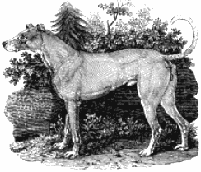
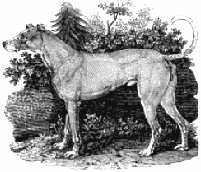
Brave Gelert

Here is a version of the story Brave Gelert written by one of our students:

Once upon a time in the Middle Ages, in an unexplored part of North Wales, there was a gorgeous valley surrounded by enormous mountains. The mountains protected the valley against the cold winds from the north. Thus, the climate was warm for most of the year. This fact, together with the frequent rains, led the soil to yield sensational harvests.

The inhabitants of the valley were happy people who worked the land, from which they got sufficient money, so they lived comfortably. Part of the money they earned by selling their produce in the city at the end of the valley was sent to their much-admired prince Llewellyn. Llewellyn lived in a luxurious castle with his baby son Peter and his dog Gelert. Gelert had been Llewellyn's main support since the death of his wife, Alice, when she gave birth to Peter. If it hadn't been for Gelert, Llewellyn wouldn't have succeeded in coming to terms with his wife's death.

One sunny day it happened that the three of them went to spend the day in the southern part of the valley, in a small cottage of theirs. After having lunch, Llewellyn went hunting, leaving Gelert in charge of little Peter. While Llewellyn was enjoying himself, two wolves smelled the little baby and went to him: that day they were going to have a great feast. But when the wolves were approaching the cottage, Gelert heard them. Like a loyal friend, he hid the baby in some bushes
behind the cottage. Afterwards, he faced the wolves fiercely, without thinkin of his own life. He managed to kill both of them. However, that was at the cost of a serious wound to his neck, which oozed blood continuously. Tired, he lay down to sleep.

In the meantime, Llewellyn had been hunting and having fun. In such happiness, he couldn't imagine what danger his companion Gelert had been in. Despite the fact that he was having a good time, he decided to come back when it started to rain.

When he reached the cottage, he could see Gelert covered in blood. Just an instand afterwards, he could see that his son's cot was empty. The logical conclusion sprang to his mind immediately, so he took up his sword to take revenge. After having killed his sleeping dog, he heart his son's cries, which led Llewellyn to him. Just behind the cottage he found the two dead wolves, which made him understand everything.

Deeply sad and wanting to die, he couldn't regret his rash and unfair attitude more. Close to tears, he carried the dog to the top of the hill and buried him. Then he collected a pile of heavy stones to mark the grave. He couldn't be the same again. His soul was dead forever and the fertile valley turned into a desert. The grave is still there.

-- Beautifully written, Ana!

Labels: , ,

Saturday, November 11, 2006

Remembrance Day

Today is Remembrance Day, also known as Poppy Day or Armistice Day in various Commonwealth countries. It is celebrated as Veterans' Day in the United States. The day is observed on the anniversary of the signing of the armistice which brought World War I (also called the First World War) to an end.

The BBC History Web site has lots on the war, including audio files of some soldiers' stories. Why not do a little listening practice?

Labels: , ,

Sunday, November 5, 2006

Bonfire Night

Please to remember
The Fifth of November,
Gunpowder treason and plot.
I see no reason
Why gunpowder treason
Should ever be forgot.


Today is Guy Fawkes Night, also known as Bonfire Night. Have you got a penny for the guy?

Labels: , ,

Wednesday, June 7, 2006

Visiting London

Planning on visiting London this summer? I highly recommend it. If you are, you might want to take a look at visitlondon.com, the city's official Web site. It's got lots of practical information, and talks about tourist attractions, food, shopping, entertainment and more.

If you've visited London, why not add a comment and tell us what your favourite thing was? Personal recommendations are the best way to find your way around a strange city, I find.

Labels: ,